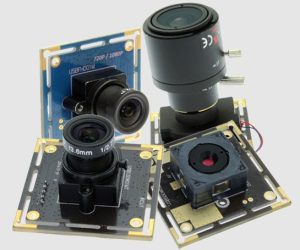
In today’s intelligent and digital era, camera modules, as the core component of visual perception, have been widely used in fields such as security monitoring, smart homes, industrial inspection, vehicle electronics, and consumer electronics. However, different application scenarios have vastly different requirements for the field of view (FOV) of the camera. As a leading enterprise committed to providing customers with high-quality and customized camera modules, Smeiker deeply understands the importance of field of view in imaging results. We provide customers with the most suitable camera module solutions for their application scenarios through differentiated product design and flexible technical support.
Camera modules with different field of view (FOV) are suitable for different application scenarios due to their different viewing angle ranges. The following are common field of view angle classifications and their differences in typical application scenarios:
1. Narrow Field of View
Range: usually less than 50 °.
Features: Narrow viewing angle, suitable for shooting distant objects. Provide high detail resolution and magnification effect.
Application Scenario:
Security monitoring: used to monitor distant targets such as borders, airports, etc.
Industrial testing: used to detect small details such as circuit boards and precision parts.
Astronomical photography: capturing distant celestial bodies.
Telephoto photography: used to capture distant scenery such as wildlife and sports events.
2. Standard Field of View
Range: usually between 50 ° and 70 °.
Characteristics: The perspective is close to the human eye’s field of view, and the image distortion is relatively small. Suitable for most daily shooting scenes.
Application Scenario:
Smart terminal camera: used for daily photography and video recording.
Car camera: used for driving recorders or rearview cameras.
Video conferencing: providing a natural perspective range.
Ordinary monitoring: used for monitoring small and medium-sized areas such as homes and shops.
3. Wide field of view (Wide FOV)
Range: usually between 70 ° and 120 °.
Features: Wide viewing angle, suitable for shooting large-scale scenes. There may be some distortion at the edges.
Application Scenario:
Indoor monitoring: covering larger areas such as conference rooms and warehouses.
Sports camera: used for capturing extreme sports or large-scale events.
Drone photography: capturing vast landscapes.
4. Ultra Wide Field of View
Range: usually greater than 120 °.
Features: The viewing angle is very wide, suitable for shooting large-scale scenes. Edge distortion is more pronounced and may require software correction.
Application Scenario:
Panoramic monitoring: used to cover large areas such as squares and parking lots.
Virtual Reality (VR): Provides an immersive perspective.
Special photography: such as architectural photography and landscape photography.
Car surround view system: used for 360 ° panoramic imaging.
5. Fisheye field of view
Range: usually greater than 180 °.
Features: Extremely wide viewing angle, covering almost the entire hemisphere. The image distortion is severe and usually requires software correction.
Application Scenario:
Panoramic monitoring: used for blind spot monitoring, such as ceiling installation.
Creative photography: used for artistic effect shooting.
Virtual Reality (VR): Provides a full perspective experience.
Car surround view system: used to achieve 360 ° seamless imaging.