
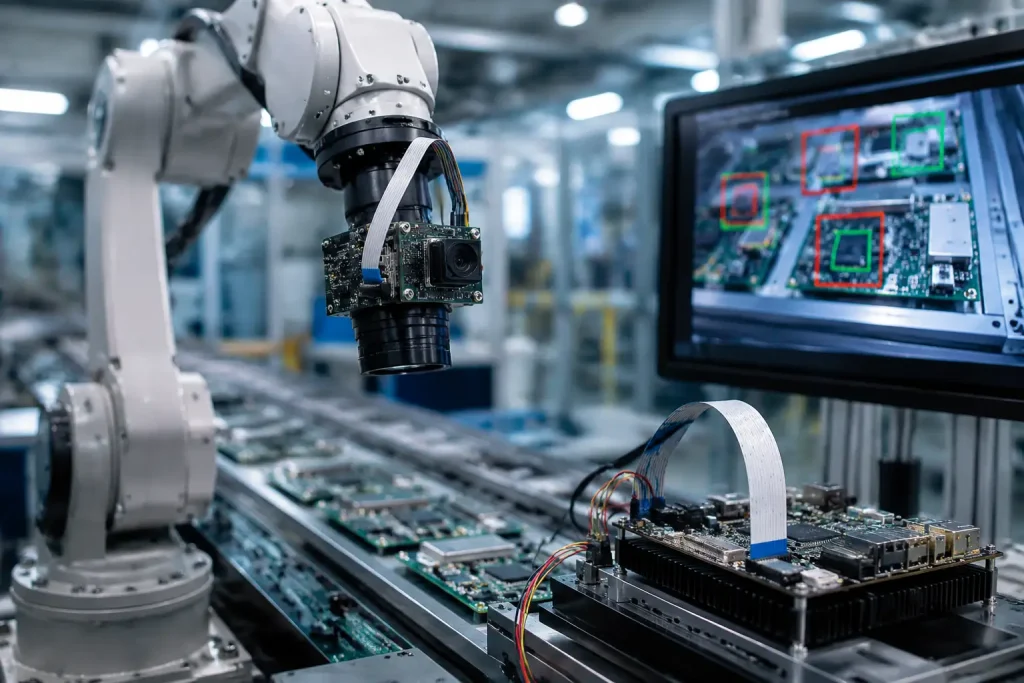
Introduction: Why Camera Module Selection Matters in AI Vision Systems
Artificial intelligence has changed the way machines understand the physical world. From industrial robots inspecting components on production lines to autonomous mobile robots navigating warehouses, AI vision systems are becoming a critical technology across manufacturing, healthcare, transportation, and smart automation.
At the center of every AI vision system is the camera module. It works as the primary sensing component that captures visual information and converts the physical environment into digital data that AI algorithms can analyze.
However, selecting a camera module for AI vision applications is not as simple as choosing the highest resolution available. Many engineering teams initially focus on megapixels, but image quality and AI recognition accuracy depend on a combination of factors, including sensor performance, lens design, shutter type, interface, frame rate, and system integration.
For example, a 12MP rolling shutter camera module may produce detailed images in a static environment, but it may fail in a high-speed robotic inspection system where motion distortion occurs. In contrast, a 2MP or 5MP global shutter camera module with optimized optics can provide more reliable object detection results.
A suitable AI vision camera module should be selected based on:
- Target application requirements
- Object movement speed
- Lighting conditions
- AI model requirements
- Processing platform compatibility
- Mechanical and electrical integration
This guide explains the key factors engineers should consider when choosing the right camera module for AI vision applications, including sensor selection, interface comparison, optical design, and real-world deployment scenarios.
1. Understanding the Role of Camera Modules in AI Vision Systems
A camera module is more than an image capture device. In an AI vision system, it is the first stage of the entire perception pipeline.
A typical AI vision architecture includes:
Camera Module
 ↓
Image Processing / ISP
↓
Embedded AI Processor
↓
Deep Learning Model
↓
Recognition Decision
The camera module determines the quality of the input data. If the captured image contains excessive noise, motion blur, poor contrast, or incorrect exposure, even advanced AI models cannot fully compensate for the limitations.
The Relationship Between Camera Module and AI Accuracy
Machine learning models such as YOLO, MobileNet, EfficientDet, and other computer vision algorithms rely heavily on image quality.
In industrial applications, the accuracy of object detection is influenced by:
- Image resolution
- Signal-to-noise ratio (SNR)
- Dynamic range
- Lens sharpness
- Frame rate
- Image consistency
For example, a factory inspection system detecting small PCB components may require:
- 5MP–12MP resolution
- High MTF lens
- Stable lighting
- Global shutter sensor
while a warehouse robot performing navigation may prioritize:
- Low latency
- Wide field of view
- High frame rate
- Multi-camera synchronization
Therefore, the camera module should be considered as part of the complete AI vision solution rather than an independent component.
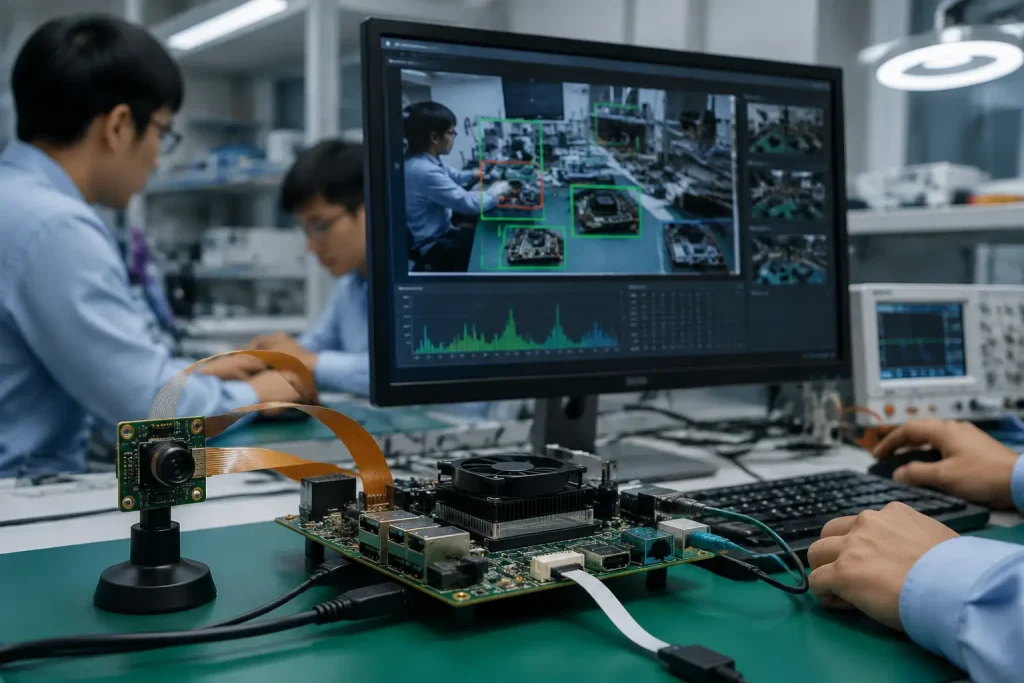
Camera Module Components for AI Vision Applications
A professional AI vision camera module usually consists of several key components:
1. Image Sensor
The sensor converts light into electrical signals.
Common sensor specifications include:
- Resolution
- Pixel size
- Sensor format
- Dynamic range
- Shutter type
Popular CMOS sensors from manufacturers such as Sony, OmniVision, and Samsung are widely used in industrial and embedded vision applications.
For AI vision systems, sensor selection depends on the application:
| Application | Recommended Sensor Type |
|---|---|
| Industrial inspection | Global shutter CMOS |
| Robot navigation | Rolling shutter / HDR sensor |
| Face recognition | High dynamic range sensor |
| Barcode scanning | High resolution sensor |
2. Lens System
The lens determines how accurately the sensor captures the scene.
Important optical parameters include:
Field of View (FOV)
FOV defines how much area the camera can see.
Typical choices:
- 60°–90°: standard vision applications
- 100°–120°: robotics navigation
- 130°+: wide-area monitoring
For autonomous robots operating in warehouses, wide-angle lenses are commonly selected because they provide better environmental awareness.
3. Camera Interface
The interface affects bandwidth, latency, and system compatibility.
Common interfaces include:
- MIPI CSI-2
- USB 2.0
- USB 3.0
- LVDS
- Ethernet
Embedded AI platforms usually prefer MIPI camera modules because of their low power consumption and direct connection capability.
2. Key Factors to Consider When Selecting a Camera Module for AI Vision
Choosing the correct camera module requires balancing performance, cost, and system requirements.
The following factors are the most important considerations for AI vision projects.
2.1 Resolution: More Megapixels Are Not Always Better
Resolution is one of the first specifications engineers check.
Common AI vision camera resolutions include:
- 720P (1MP)
- 1080P (2MP)
- 5MP
- 8MP
- 13MP
- 48MP
Higher resolution provides more image detail, but it also increases:
- Data bandwidth
- Storage requirements
- Processing workload
- Power consumption
For example:
A 1920×1080 Full HD camera produces about 2 million pixels per frame.
A 3840×2160 4K camera produces about 8.3 million pixels per frame.
At 30 frames per second:
1080P:
2 million × 30 = 60 million pixels/sec

4K:
8.3 million × 30 = 249 million pixels/sec
The processing requirement increases significantly.
Therefore, AI applications should select resolution based on detection distance and object size.
Example:
Robot obstacle detection
Usually:
- 2MP–5MP is sufficient
Electronic component inspection
Usually:
- 8MP–12MP is preferred
2.2 Frame Rate: Important for Moving Objects
Frame rate determines how smoothly a camera captures motion.
Typical frame rates:
- 30fps: general AI vision
- 60fps: fast movement
- 90fps–120fps: high-speed inspection
For robots and industrial automation, insufficient frame rate can cause:
- missed objects
- inaccurate tracking
- delayed response
A robot moving at high speed requires lower motion blur and faster image acquisition.
2.3 Dynamic Range and Low-Light Performance
Real-world environments rarely have perfect lighting.
AI cameras often operate in:
- factories
- warehouses
- outdoor environments
- parking areas
A sensor with high dynamic range can handle both bright and dark areas in the same image.
Important specifications:
- HDR capability
- Pixel size
- Noise performance
- Exposure control
For example:
A security robot working outdoors may encounter:
- direct sunlight
- shadows
- indoor lighting
A camera module with HDR support provides more consistent AI recognition results.
3. Choosing the Right Image Sensor for AI Vision Applications
The image sensor is one of the most important components inside a camera module because it directly determines how accurately the system captures visual information.
In AI vision applications, engineers should not select a sensor only based on resolution. A sensor with the right combination of pixel size, shutter type, sensitivity, and dynamic range will usually deliver better AI performance than a higher-resolution sensor with poor imaging characteristics.
The most common image sensors used in AI vision camera modules are CMOS sensors.
Modern CMOS sensors provide advantages such as:
- Low power consumption
- High-speed image capture
- Compact size
- Cost efficiency
- Easy integration with embedded systems
For embedded AI devices and robotics applications, CMOS camera modules have become the mainstream solution.
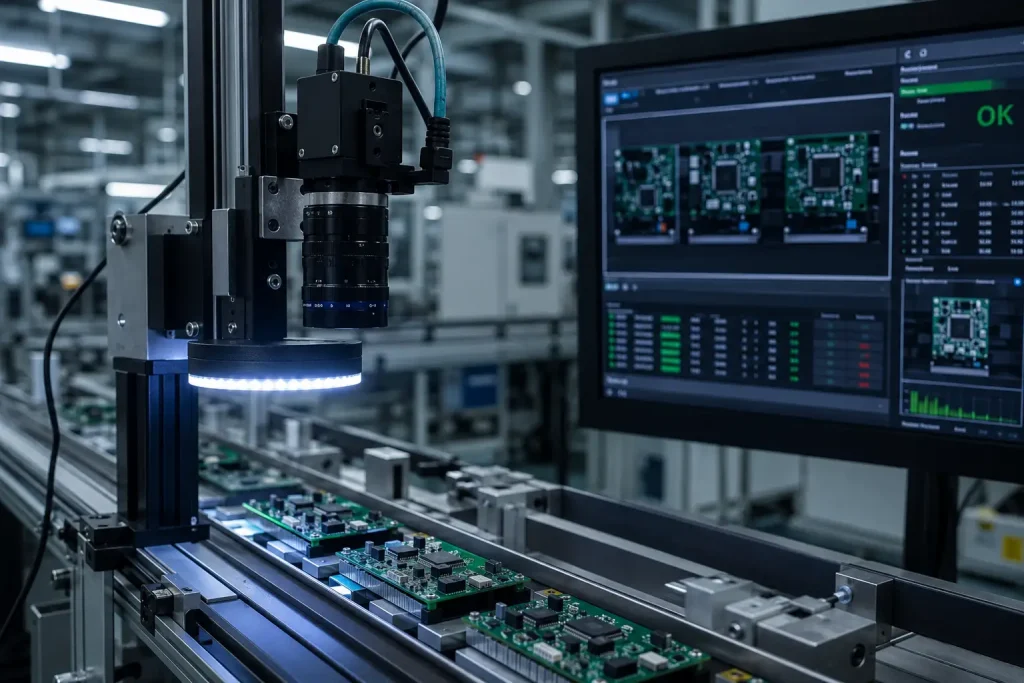
3.1 Rolling Shutter vs Global Shutter Camera Modules
One of the most important decisions in AI vision system design is choosing between rolling shutter and global shutter sensors.
Rolling Shutter Sensor
A rolling shutter sensor captures an image line by line.
Advantages:
- Lower cost
- Higher resolution availability
- Lower power consumption
- Suitable for static scenes
Common applications:
- Smart home cameras
- Video conferencing
- Retail monitoring
- General AI recognition
However, rolling shutter sensors may suffer from motion distortion when objects move quickly.
Example:
A robot arm moving at high speed may appear distorted because different parts of the image are captured at slightly different times.
Global Shutter Sensor
A global shutter sensor captures the entire image at the same moment.
Advantages:
- Eliminates motion distortion
- Accurate object tracking
- Better for high-speed movement
Typical applications:
- Machine vision
- Industrial inspection
- Robotics
- Automated manufacturing
For example, an automated factory inspection system checking moving products on a conveyor belt usually requires a global shutter camera module.
A typical industrial configuration may include:
- 2MP–8MP global shutter sensor
- 60fps or higher frame rate
- C-mount or high-quality M12 lens
- USB3.0 or MIPI interface
For AI vision systems involving fast movement, global shutter technology can significantly improve detection reliability.
3.2 Sensor Resolution and Pixel Size
Resolution determines image detail, while pixel size determines light sensitivity.
These two parameters must be considered together.
A sensor with smaller pixels can achieve higher resolution in a compact size, but larger pixels usually provide:
- Better low-light performance
- Lower noise
- Higher dynamic range
For example:
A robot operating inside a warehouse with limited lighting may benefit more from a sensor with larger pixels rather than simply choosing the highest megapixel camera.
3.3 Sensor Selection Based on AI Application
Different AI vision applications require different sensor characteristics.
| Application | Recommended Sensor Features |
|---|---|
| Industrial inspection | Global shutter, high accuracy |
| Robot navigation | Wide dynamic range, low latency |
| Face recognition | HDR, high resolution |
| Barcode recognition | High resolution, sharp optics |
| Outdoor robots | Low-light performance, HDR |
A professional camera module supplier should evaluate the entire imaging system instead of recommending the same sensor for every project.
4. Camera Interface Selection: MIPI CSI-2 vs USB Camera Module
The camera interface is another critical factor when designing an AI vision system.
The two most common interfaces today are:
- MIPI CSI-2
- USB Camera Interface
The right choice depends on the processing platform, application requirements, and development environment.
4.1 MIPI CSI-2 Camera Modules
MIPI CSI-2 is widely used in embedded vision systems.
It is especially popular in:
- ARM-based development boards
- Edge AI devices
- Smart robots
- Embedded industrial equipment
Platforms such as NVIDIA Jetson, Qualcomm processors, and Rockchip AI processors commonly support MIPI camera interfaces.
The official MIPI CSI-2 specification defines a high-speed camera interface designed for low-power image transmission between cameras and processors.
Reference:
MIPI Alliance CSI-2 specification
Advantages of MIPI Camera Modules
Lower Power Consumption
MIPI transmits image data efficiently, making it suitable for battery-powered devices.
Applications:
- Mobile robots
- Drones
- Portable AI devices
Lower Latency
Because MIPI cameras connect directly to the processor:
Camera Sensor → ISP → AI Processor
the system can achieve faster response times.
This is important for:
- Autonomous robots
- Real-time object detection
- Industrial automation
Compact Design
MIPI camera modules usually use a small FPC connector, allowing flexible mechanical integration.
This makes them ideal for:
- Embedded devices
- Robotics systems
- Smart terminals
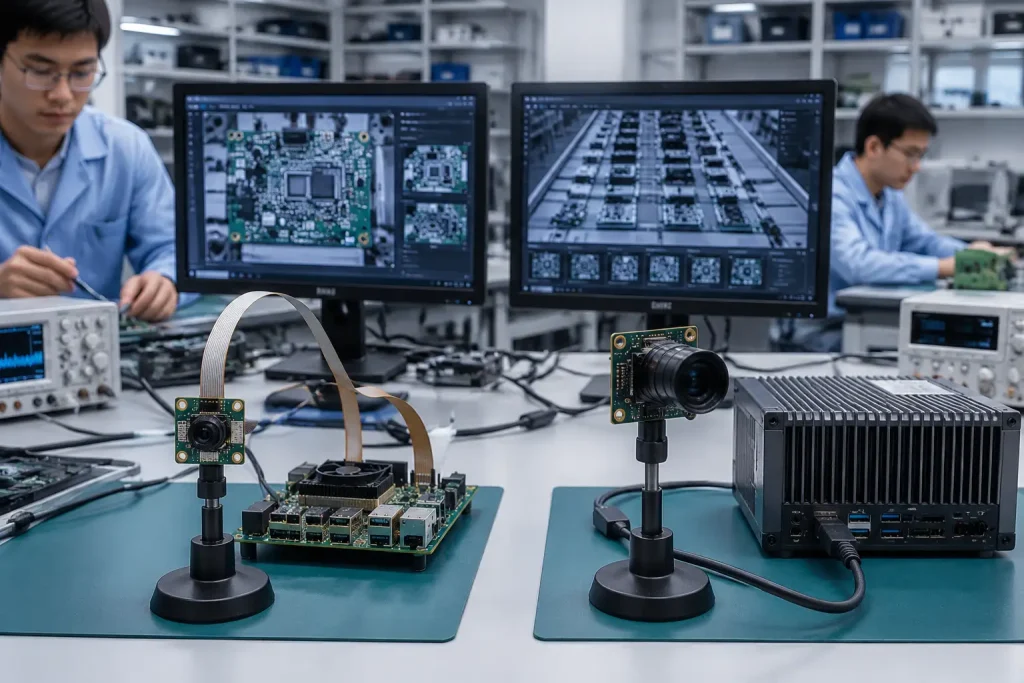
4.2 USB Camera Modules
USB camera modules are widely used because they provide simple plug-and-play integration.
Common versions include:
- USB 2.0 Camera Module
- USB 3.0 Camera Module
They are commonly used in:
- Industrial PCs
- Desktop vision systems
- Research projects
- Prototype development
USB 2.0 vs USB 3.0 Camera Modules
| Feature | USB 2.0 | USB 3.0 |
|---|---|---|
| Bandwidth | Lower | Higher |
| Resolution Support | 720P/1080P | 4K and above |
| Frame Rate | Limited | Higher |
| Application | Basic vision | Industrial AI |
For AI vision applications requiring high-resolution images or high frame rates, USB 3.0 camera modules are usually preferred.
For example:
A 4K USB 3.0 camera module can provide:
- 3840×2160 resolution
- 30fps video output
- Direct connection to industrial PCs
4.3 How to Choose Between MIPI and USB Camera Modules
The decision usually depends on the system architecture.
Choose MIPI Camera Module When:
- Using ARM processors
- Building compact embedded devices
- Need low power consumption
- Require direct ISP integration
Examples:
- RK3588 AI boards
- Jetson Nano / Orin platforms
- Embedded robots
Choose USB Camera Module When:
- Using Windows/Linux PCs
- Need easy integration
- Developing prototypes quickly
- Using industrial computers
Examples:
- Machine vision inspection systems
- Laboratory equipment
- Desktop AI applications
5. Lens and Optical Requirements for AI Vision Camera Modules
Many AI vision projects focus heavily on sensors and processors but underestimate the importance of lens selection.
In reality, poor optical design can limit the performance of even the best AI algorithms.
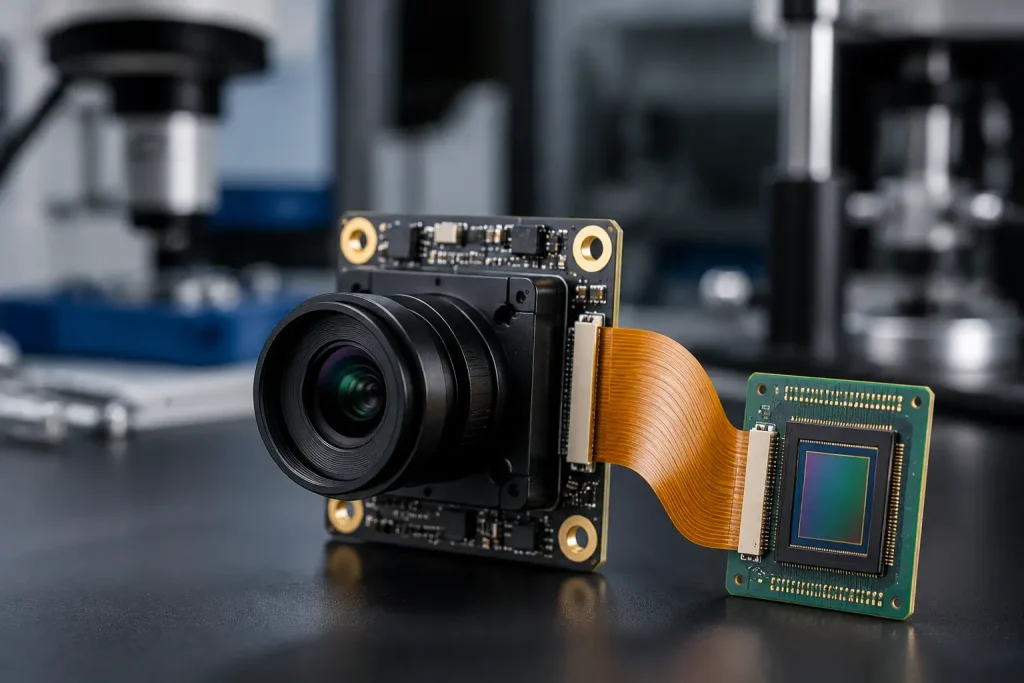
A camera module is an optical system:
Lens + Sensor + ISP + AI Algorithm
All parts must work together.
5.1 Field of View (FOV) Selection
Field of View determines the visible area captured by the camera.
Common lens options:
Narrow FOV (40°–60°)
Suitable for:
- Inspection systems
- Long-distance recognition
- Detailed object analysis
Standard FOV (70°–90°)
Suitable for:
- General AI vision
- Smart devices
- Indoor monitoring
Wide FOV (100°–140°)
Suitable for:
- Robots
- Autonomous navigation
- Large-area perception
For example:
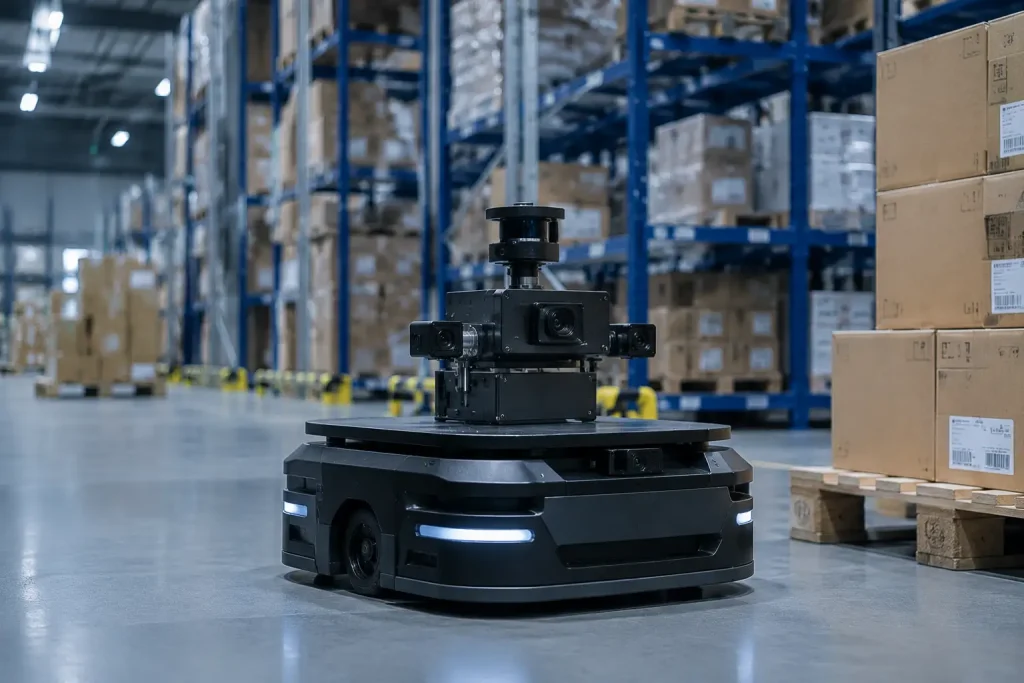
An AMR robot moving through a warehouse usually requires a wide-angle camera because it needs to detect obstacles across a large area.
5.2 Lens Resolution and MTF Performance
A high-resolution sensor requires a matching high-quality lens.
MTF (Modulation Transfer Function) is commonly used to evaluate lens resolution capability.
A mismatch between lens and sensor can cause:
- blurred edges
- reduced AI detection accuracy
- poor image details
Example:
A 12MP sensor paired with a low-quality lens may perform worse than a 5MP sensor with a properly matched industrial lens.
5.3 Fixed Focus vs Auto Focus Camera Modules
Different applications require different focusing methods.
Fixed Focus
Advantages:
- Simple structure
- Lower cost
- Higher reliability
Suitable for:
- Industrial devices
- Fixed-distance inspection
Auto Focus (AF)
Advantages:
- Flexible shooting distance
- Better user experience
Suitable for:
- Smart terminals
- Document scanners
- Interactive robots
For industrial AI systems, fixed-focus solutions are often preferred because they provide better long-term stability.
6. Camera Modules for Different AI Vision Applications
AI vision technology is now used across many industries, but each application has different requirements for camera modules.
A camera module designed for a factory inspection system may not be suitable for a mobile robot or smart retail device.
Understanding application requirements is the key to selecting the correct imaging solution.
6.1 Camera Modules for Industrial Machine Vision
Industrial machine vision is one of the most demanding applications for camera modules.
Manufacturers use AI vision systems for:
- Product quality inspection
- Defect detection
- Component positioning
- Measurement and analysis
- Automated sorting
Typical applications include:
- PCB inspection
- Semiconductor inspection
- Automotive component inspection
- Packaging inspection
Recommended Camera Module Features
Industrial inspection systems usually require:
- Global shutter sensor
- High image consistency
- High frame rate
- Low distortion lens
- Stable long-term operation
For example, a PCB inspection system may require:
- 5MP–12MP resolution
- Global shutter sensor
- USB 3.0 interface
- Industrial-grade lens
The reason is simple: the AI model needs clear and stable image input to accurately identify tiny defects.
A blurry image caused by vibration or object movement can significantly reduce detection accuracy.
6.2 Camera Modules for Robotics Applications
Robots rely on cameras to understand their environment.
Unlike fixed industrial cameras, robotic vision systems usually require flexibility and real-time processing.
Common robotic applications include:
- Autonomous mobile robots (AMR)
- Collaborative robots (Cobots)
- Delivery robots
- Inspection robots
- Service robots
A typical robot vision architecture:
Camera Module
↓
Embedded AI Processor
↓
Computer Vision Algorithm
↓
Robot Decision System
↓
Motor Control
Camera Requirements for Robots
Robot applications usually prioritize:
Low Latency
The robot must react quickly to environmental changes.
For example:
A warehouse robot detecting an obstacle needs immediate response to avoid collision.
Wide Field of View
Robots need broader environmental awareness.
Common lens selection:
- 90°
- 120°
- 150°
Compact Size
Space inside robots is limited.
MIPI camera modules are commonly selected because they offer:
- Small form factor
- Low power consumption
- Easy integration
6.3 Camera Modules for Edge AI Devices
Edge AI computing is becoming increasingly important because it allows AI processing directly on devices instead of relying entirely on cloud servers.
Examples:
- Smart cameras
- AI gateways
- Intelligent terminals
- Embedded vision systems
A typical edge AI solution:
Camera Module
↓
ARM AI Processor
↓
Neural Network Model
↓
Local Decision
Popular AI processors include:
- NVIDIA Jetson platforms
- Rockchip RK3588
- Qualcomm AI platforms
For embedded AI boards, MIPI camera modules are widely used because they can connect directly with processors.
For example, RK3588-based AI systems often combine:
- MIPI camera input
- NPU acceleration
- Linux operating system
- AI inference frameworks
This combination is widely used in:
- Smart retail
- Robotics
- Industrial automation
6.4 Camera Modules for Smart Retail and Intelligent Monitoring
Retail environments increasingly use AI vision for:
- Customer behavior analysis
- Product recognition
- Smart checkout
- Inventory monitoring
These applications usually require:
- High-resolution images
- Good low-light performance
- AI recognition capability
For example:
A smart retail cabinet may use multiple camera modules to identify:
- Customer interaction
- Product movement
- Item selection
The camera module must provide stable image quality under different lighting conditions.
7. Integration Considerations for AI Vision Systems
Selecting a camera module is only the first step.
Successful AI vision deployment requires proper hardware and software integration.
7.1 Hardware Integration
Engineers should consider:
Mechanical Design
Important factors:
- Camera size
- Lens position
- Mounting method
- Protection requirements
For industrial environments:
- Dust protection
- Vibration resistance
- Temperature stability
may become important.
Electrical Compatibility
Before integrating a camera module, engineers should verify:
- Operating voltage
- Interface compatibility
- Connector type
- Power consumption
Common camera module interfaces:
- MIPI CSI-2
- USB
- FPC connector
7.2 Software and Driver Support
A camera module is not complete without proper software support.
Important software elements include:
- Linux drivers
- Android drivers
- Camera SDK
- ISP tuning
- Image processing support
For embedded AI platforms, compatibility between camera sensor and processor is critical.
For example:
A camera sensor may technically support MIPI output, but without proper driver integration and ISP configuration, the final image quality may not meet project requirements.
7.3 AI Model and Camera Optimization
The camera and AI model should be optimized together.
Important factors include:
- Input image size
- Frame rate
- Lighting conditions
- Object distance
- Detection requirements
For example:
A YOLO-based object detection model may perform differently when trained with:
- 640×640 images
- 1920×1080 images
Therefore, camera selection should consider the AI algorithm requirements from the beginning.
8. Future Trends of Camera Modules in AI Vision and Edge Computing
The development of AI vision is driving continuous innovation in camera module technology.
Several trends will shape the future market.
8.1 Higher Resolution with Better AI Processing
Camera modules are moving toward higher resolution:
- 8MP
- 12MP
- 48MP
However, future development will focus not only on more pixels but also on better AI processing efficiency.
Higher resolution will enable:
- More accurate inspection
- Longer detection distance
- Better object recognition
8.2 AI-Enhanced Camera Modules
Traditional cameras only capture images.
Future intelligent camera modules will include:
- AI ISP
- On-device processing
- Image enhancement algorithms
The camera itself will become smarter.
Instead of sending all raw data to the processor, the camera module may perform:
- Object detection
- Image classification
- Feature extraction
This reduces:
- Processing load
- Data transmission
- Power consumption
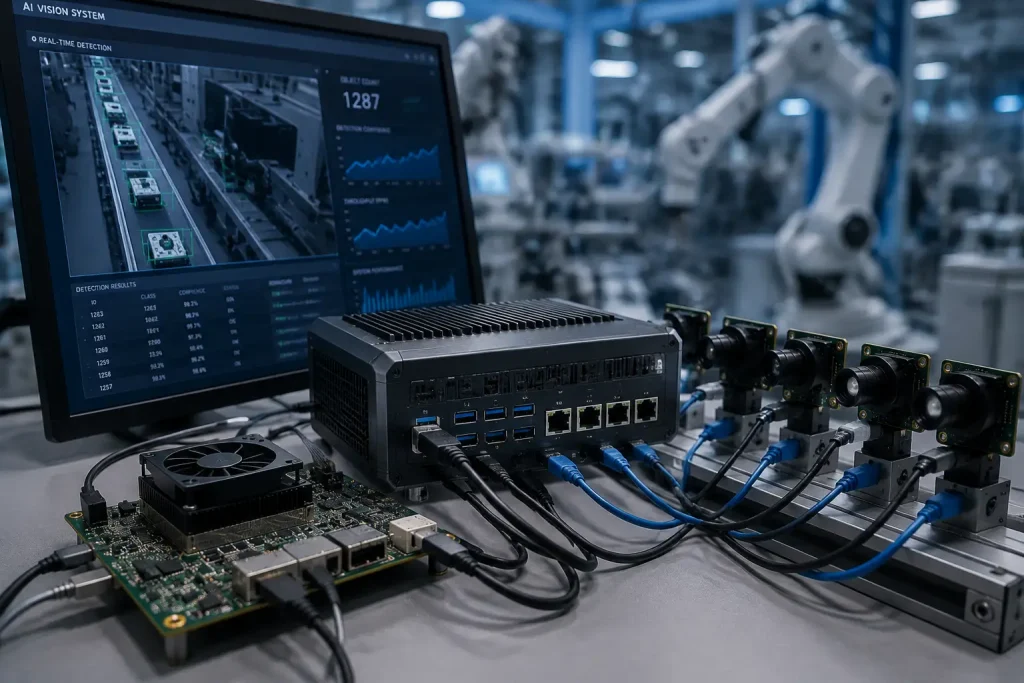
8.3 Multi-Camera Vision Systems
Many AI applications require multiple cameras.
Examples:
Robots:
- Front camera
- Side cameras
- Depth cameras
Autonomous systems:
- Surround-view cameras
- Stereo vision
Multi-camera systems improve:
- Environmental perception
- Depth understanding
- Navigation accuracy
8.4 Camera Modules for Next-Generation Robotics
As robots become more intelligent, camera modules will become increasingly important.
Future robots will require:
- Better perception
- Faster response
- Higher accuracy
Applications include:
- Autonomous factories
- Humanoid robots
- Smart logistics
- AI assistants
The combination of:
Camera Module + Edge AI + Robotics
will become one of the most important technology trends in intelligent automation.
Conclusion: Selecting the Right Camera Module for AI Vision Applications
Choosing the right camera module for an AI vision system requires more than comparing megapixel numbers.
A successful solution depends on matching:
- Sensor performance
- Lens design
- Interface selection
- Processing platform
- Application requirements
For industrial inspection, global shutter camera modules may provide the best accuracy.
For embedded AI devices, MIPI camera modules offer compact integration and low power consumption.
For PC-based vision systems, USB 3.0 camera modules provide flexibility and high bandwidth.
The most effective approach is to evaluate the entire vision system, from image capture to AI decision-making.
As AI continues expanding into robotics, automation, and smart devices, camera modules will remain the critical sensing technology connecting machines with the real world.